Your match
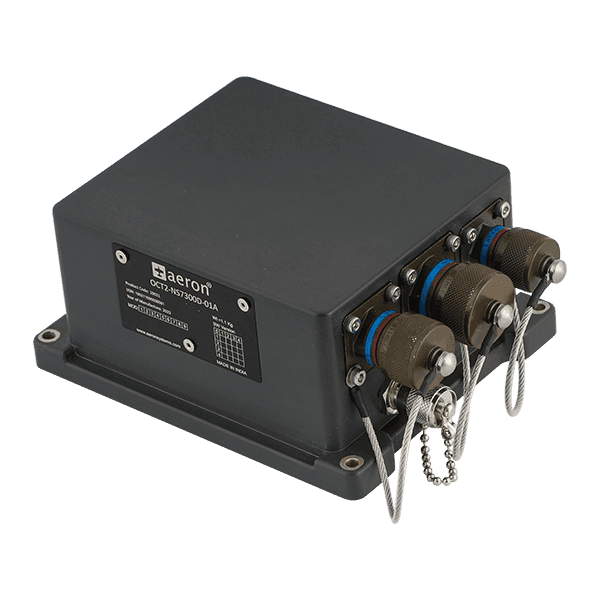
Octantis 2 INS-GNSS
Rugged High Reliability Inertial Navigation System for Land and Unmanned Applications
- Drift without GNSS<1% CEP of DT with external odometer / air speed data
- Gyro bias instability<1 °/hr (typical)
- Weight<1.1 kg
Inertial Navigation Systems
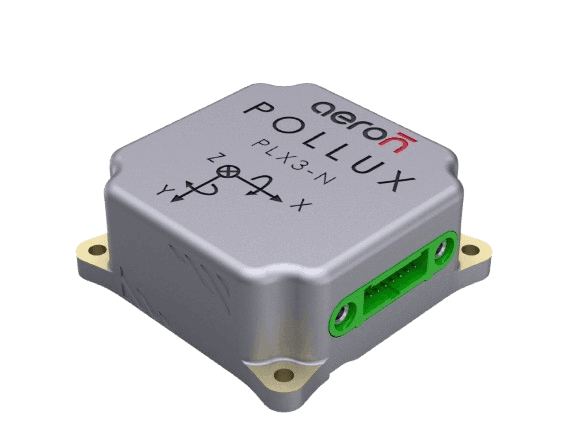
Micro-miniature Inertial Navigation system
Answer one question to see which navigation systems fit your platform.
What platform are you deploying on?
Your match: Pollux 3 INS-GNSS and Octantis 3 INS-GNSS
Your match
Rugged High Reliability Inertial Navigation System for Land and Unmanned Applications
Your match
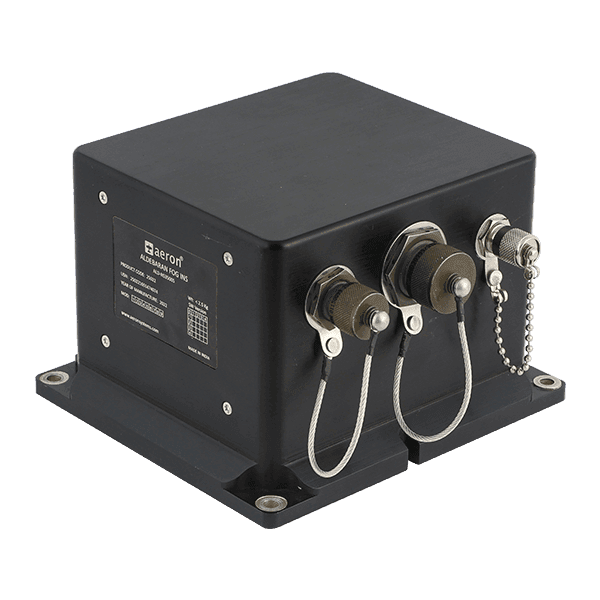
Superior tactical Fibre-Optic Gyro based Inertial Navigation System
Your match
Rugged High Reliability Inertial Navigation System for Land and Unmanned Applications
Your match
Superior tactical Fibre-Optic Gyro based Inertial Navigation System
Your match
Superior tactical Fibre-Optic Gyro based Inertial Navigation System
Your match
Micro-miniature Inertial Navigation system
This is the product on show
Read how it solves itMiniature GNSS-denied navigation for uncrewed platforms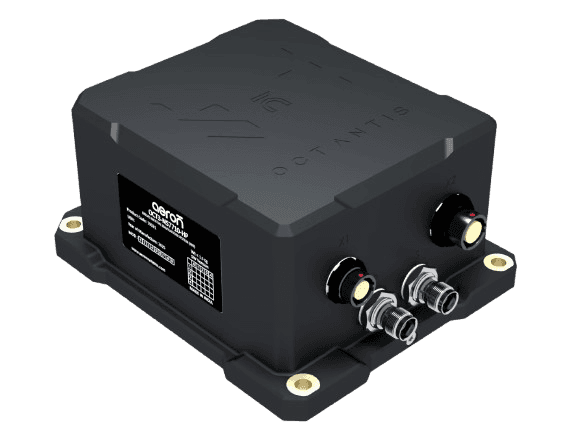
Your match
Rugged Dual Antenna Inertial Navigation System for Unmanned and Land Applications
Pollux 3 is a micro-miniature MEMS-based inertial navigation system combining tri-axial accelerometers, gyroscopes and a magnetometer with an integrated multi-constellation GNSS receiver. An Extended Kalman Filter estimates position, velocity, attitude and heading, with navigation output at 200 Hz. It weighs ~38 g, draws
Sensor and GNSS inputs are fused in real time through Aeron's Extended Kalman Filter to deliver stable position, velocity, attitude, and heading estimates.
In
Out
When satellites vanish in tunnels, urban canyons, or interference zones, it holds an accurate position and true heading by minimising INS drift.
Miniature 37 (L) × 37 (W) × 15 (H) mm footprint at ~38 g, drawing under 1.5 W — built for size- and power-constrained unmanned platforms.
1.5 m CEP position accuracy and 0.1 m/s horizontal velocity accuracy (1σ) with integrated multi-constellation GNSS, including jamming and spoofing detection.
Weighs approximately 38 g, suitable for micro-UAV applications while remaining ruggedized for demanding operating environments.
Uses high-quality MEMS gyros for near-tactical performance and usable GNSS-denied performance during short-term outages.
Complied to MIL-STD-810G to perform reliably in extreme outdoor environments of temperature and vibration.
Ruggedized construction built to withstand the shocks and vibration typical of real-world unmanned-platform operation, such as quadcopter landings.
Offers near-tactical performance, providing the best estimates of navigation parameters during short-term GNSS outages.
IP65 compliant, able to endure water spray and rain — a reliable solution even when externally mounted.
Standard RS232 and UART TTL interfaces plus SPI/I²C for external airspeed and magnetometer aiding input, for easy integration with autopilot systems and controllers.
| RS232 | Data output (NMEA & Binary), config I/O (Binary), external aiding input (Binary) — up to 2,000,000 baud |
|---|---|
| UART | Up to 921,600 baud |
| SPI / I²C | External airspeed & magnetometer aiding input |
| Output Data Protocol | NMEA 0183; Binary (Aeron Standard Binary Protocol) |
| Data Rate | Up to 1000 Hz (IMU) / 200 Hz (Navigation) |
| Output Parameters | Euler Angles (Yaw, Pitch, Roll), Quaternion, Position, Velocity, Acceleration, Angular Rate, GNSS Parameters, Health Status, Time |
| Range | ±10/40 g (User Configurable) |
|---|---|
| Bias Instability * | 8 µg |
| Velocity Random Walk (VRW) * | 0.03 m/s/√hr |
| Noise Density * | 50 µg/√Hz |
| Bias Repeatability | 0.15 mg |
| Range | ±500/2000 °/s (User Configurable) |
|---|---|
| Bias Instability * | 2 °/hr |
| Angular Random Walk (ARW) * | 0.2 °/√hr |
| Noise Density * | 0.002 °/s/√Hz |
| Bias Repeatability | 15 °/hr |
| Horizontal — Good GNSS | 1.5 m CEP |
|---|---|
| Horizontal — With SBAS | 1 m CEP |
| Horizontal — GNSS-Denied ² | 3% 1σ DT (3D, external airspeed aiding) / 2% 1σ DT (2D) |
| Vertical — With GNSS | 2 m (1σ) |
| Vertical — With SBAS | 1.5 m (1σ) |
| Weight | ~38 g (± 2 g) |
|---|---|
| Size | 37 (L) × 37 (W) × 15 (H) mm (± 0.3 mm) |
| Operating Temperature | −40°C to +71°C |
| Storage Temperature | −40°C to +85°C |
| Connector | I/O device connector + mating connector, dedicated GNSS antenna connector |
| Roll Range | ±180° |
|---|---|
| Pitch Range | ±90° |
| Accuracy ¹ | 0.1° (static) / 0.2° (dynamic) |
| Resolution | 0.01° |
| Constellations | GPS (L1C/A, L5), GLONASS (L1OF), Galileo (E1-B/C, E5a), BeiDou (B1i, B2a), NavIC (SPS-L5) |
|---|---|
| Correction Signal | SBAS |
| Time to First Fix (Cold Start) | 35 seconds (typical) |
| Jamming & Spoofing Detection | Yes |
| Range | ±180° |
|---|---|
| Accuracy ¹ | 1° with magnetometer / < 0.3° in dynamic conditions |
| Resolution | 0.01° |
| Range | 300 – 1250 hPa |
|---|---|
| Accuracy * | 0.5 hPa |
| Horizontal Velocity ¹ | 0.1 m/s (1σ, good GNSS availability) |
|---|---|
| Vertical Velocity | 0.3 m/s |
| Supply Voltage | 5 ± 0.5 V DC |
|---|---|
| Power Consumption | < 1.5 W |
| Environmental Test | MIL-STD-810G |
|---|---|
| Ingress Protection | IP65 |
| Range | ±50 gauss |
|---|
¹ 1σ accuracy; heading accuracy shown with magnetometer and in dynamic conditions with GNSS.
² GNSS-denied accuracy is a function of elapsed outage time and depends on the accuracy of external speed/airspeed aiding.
* Typical / Allan Variance.
 Drone and UAV Navigation
 Autonomous Control and ADAS
Common questions about the Pollux 3 INS-GNSS.
Pollux 3 delivers horizontal position accuracy better than 1.5 m CEP with GNSS and horizontal velocity accuracy of 0.1 m/s (1σ).
Pollux 3 provides navigation outputs at up to 200 Hz and raw IMU data at up to 1000 Hz.
Pollux 3 is ideal for UAVs, drones, UGVs, autonomous robots, unmanned surface vehicles, and other compact autonomous platforms requiring accurate navigation and attitude information.
It supports RS232, UART, SPI, and I²C interfaces.
It combines high performance, compact design, and reliable navigation in a single unit.
Other products from Aerospace & Strategic Electronics, sized by their real dimensions.
172.4 × 155 × 114 mmAldebaran FOG INS-GNSSSuperior tactical Fibre-Optic Gyro based Inertial Navigation System142 × 115 × 65 mmOctantis INS-GNSSRugged High Reliability Inertial Navigation System for Land and Unmanned Applications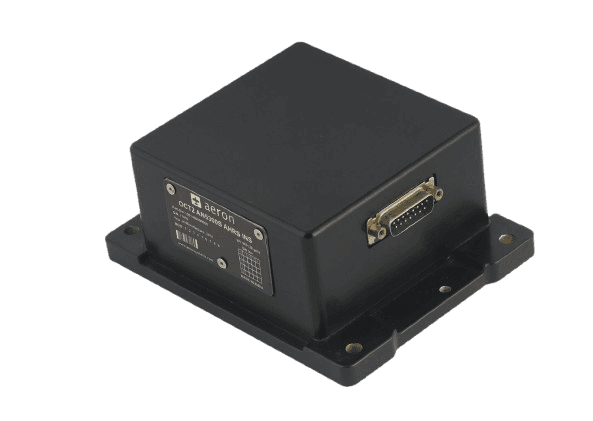 148 × 115 × 63 mmOctantis 2 AN5300S AHRSAirborne Qualified AHRS Systems
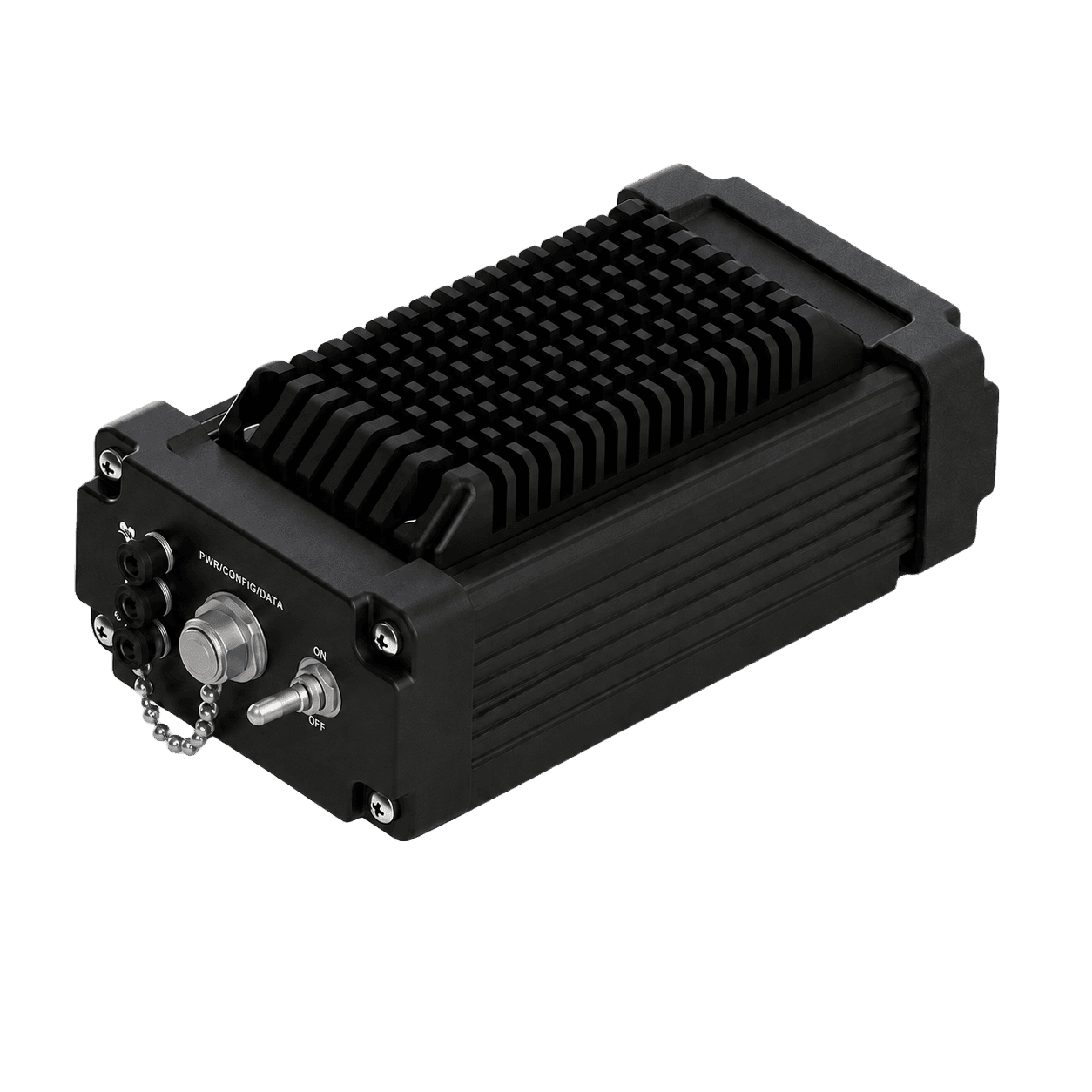 156 × 80 × 56 mmDenebDeneb DNB-GBM200 Multi-constellation GNSS support
Ask for a price on Pollux 3 INS-GNSS, or talk to one of our engineers about your application.
Sales
Products, quotes and demos
Technical support
Help with an installed product
Careers
Jobs and applications
India
Plot No. 7, Lane No. 5, Laxman Nagar, Balewadi
Pune, Maharashtra 411045, India
Vivan Kohli Industrial Park, Shed No. 5, Gat No. 446
Old Pune-Mumbai Highway, Naigaon, Kanhe Phata, Talegaon
Pune, Maharashtra 412106, India
First Floor, Building No. 11, Sai Anugraha
Jeevan Bhima Nagar Main Road
Bengaluru, Karnataka 560075, India
Door No. 52-1/4-8D, Plot No. 9, 5th Cross Road
Veterinary Colony
Vijayawada, Andhra Pradesh 520008, India
International
Saif Executive Office # P8-17-02
Sharjah Airport International Free Zone Authority
PO Box 8000, Sharjah, U.A.E.


