Your match
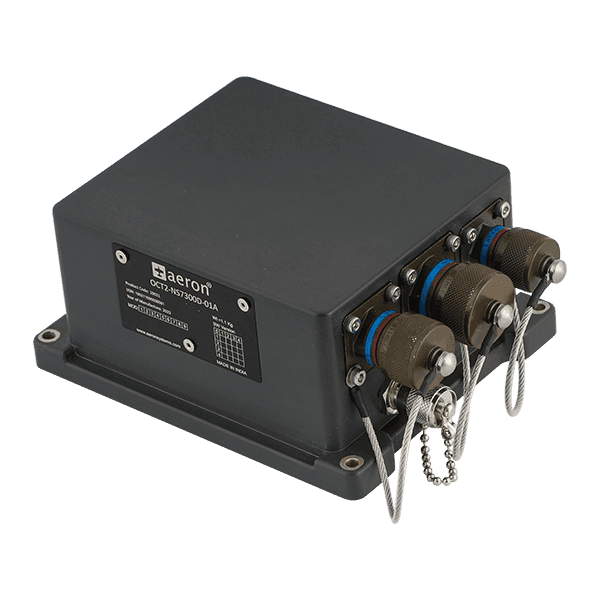
Octantis 2 INS-GNSS
Rugged High Reliability Inertial Navigation System for Land and Unmanned Applications
- Drift without GNSS<1% CEP of DT with external odometer / air speed data
- Gyro bias instability<1 °/hr (typical)
- Weight<1.1 kg
Resilient inertial navigation systems for crewed and unmanned applications.
Answer one question to see which navigation systems fit your platform.
What platform are you deploying on?
Your match: Octantis 2 INS-GNSS and Aldebaran FOG INS-GNSS
Your match
Rugged High Reliability Inertial Navigation System for Land and Unmanned Applications
Your match
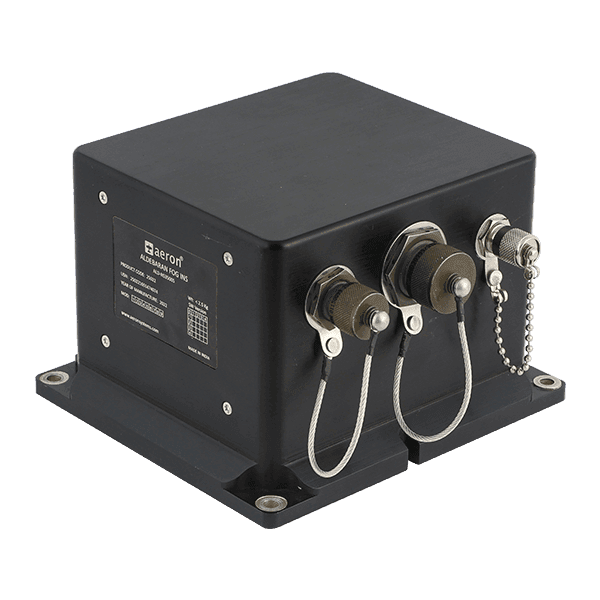
Superior tactical Fibre-Optic Gyro based Inertial Navigation System
Your match
Rugged High Reliability Inertial Navigation System for Land and Unmanned Applications
Your match
Superior tactical Fibre-Optic Gyro based Inertial Navigation System
Your match
Superior tactical Fibre-Optic Gyro based Inertial Navigation System
Your match
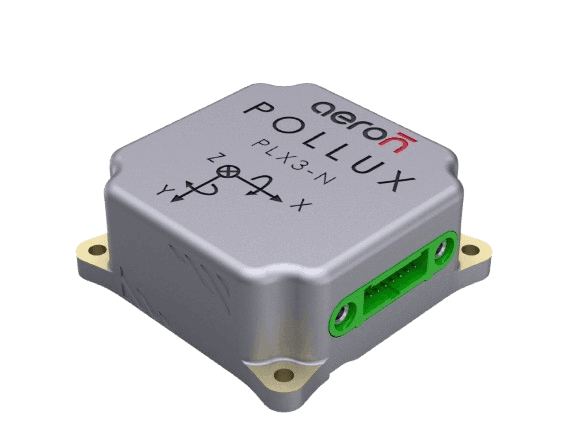
Micro-miniature Inertial Navigation system
Your match
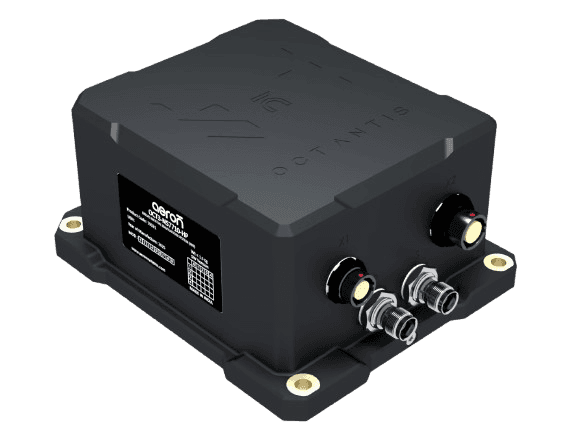
Rugged Dual Antenna Inertial Navigation System for Unmanned and Land Applications
Field-proven Inertial Navigation Systems (INS-GNSS) engineered for mission-critical applications where precision, reliability, and real-time performance are essential. Our inertial navigation systems combine high-performance MEMS and Fibre Optic Gyro (FOG) technologies with intelligent sensor fusion algorithms to deliver accurate position, velocity, attitude, and heading information in GNSS-denied environments. Aeron's INS solutions are deployed across land, airborne, unmanned, robotics, and marine applications worldwide.
The INS systems offer GNSS-denied accuracies ranging from 0.1% of distance travelled or under 3 meters in a minute to 1% of distance travelled, depending on the variant. The performance of our INS systems is demonstrated repeatedly over hundreds of thousands of miles — choose from the smallest SWaP (Pollux 3) to one of the most qualified INS systems on the market (Octantis) for your application.
Octantis 2, Octantis 3, and Aldebaran all follow the same sensor-fusion approach — only the sensor grade and configuration change between them.
In
Out
Nine core capabilities shared across the Octantis and Aldebaran INS family.
Octantis features Aeron's own IMU incorporating high-performance MEMS sensors (0.5°/hr gyro BI) offering exceptional GNSS-denied performance.
Provides accurate heading information in static as well as dynamic conditions, reducing dependency on magnetometer.
Integrated L1, L2, and L5 (GPS, GALILEO, IRNSS/NavIC) GNSS receiver with RTK positioning capability.
Equipment qualified to MIL-standards for power supply, EMC, and environmental conditions.
GNSS receiver-level safeguard from intentional jamming and spoofing, providing more resilient positioning.
A wide array of interface options and supported protocols over 2×RS232, 2×RS422, Ethernet, CAN, and 1PPS time synchronization.
RTK-based precision positioning with 0.8 cm position accuracy for robotics, autonomous mobility, and precision surveying using unmanned vehicles.
Provides accurate attitude and heading performance essential for stabilisation applications.
Delivers <1% DT (CEP) performance in GNSS-denied conditions with speed aiding.
Octantis 2, Octantis 3, and Aldebaran FOG INS — every spec, side by side.
| Octantis 2MEMS · Land & Unmanned | Octantis 3MEMS Dual-Antenna | AldebaranTactical FOG | |
|---|---|---|---|
| Sensor Technology | |||
| Gyro TypeAldebaran pairs closed-loop fibre-optic gyros for the lowest gyro bias in the family | MEMS | MEMS | Closed-Loop FOG (stronger) |
| Gyro Bias Instability | <1°/hr (typical) | 0.8°/hr | 0.1°/hr (stronger) |
| Accelerometer Bias Instability | <50 μg | 15 μg | 15 μg |
| GNSS & Positioning | |||
| GNSS Frequencies | L1/L2/L5 + IRNSS/NavIC | L1/L2/L5 + IRNSS/NavIC | L1/L2/L5 + IRNSS/NavIC |
| Antenna Configuration | Single Antenna | Dual Antenna (GNSS Compassing) (stronger) | Single Antenna |
| RTK Horizontal Accuracy | <0.8 cm | <0.8 cm | <0.8 cm |
| TTFF Cold Start | 45 s | 30 s (stronger) | 45 s |
| Attitude & Heading | |||
| Heading AccuracyOctantis 3's dual-antenna compassing delivers the sharpest heading in the family | <0.3° RMS with GNSS (single antenna) <0.5° RMS with magnetometer | 0.3° (1σ) single antenna 0.1° (1σ) dual antenna @1m 0.02° (1σ) dual antenna @5m (stronger) | 0.3° RMS with GNSS 0.5° RMS with magnetometer |
| Communication & Interfaces | |||
| Interfaces | RS232 ×2 · RS422 CAN · Ethernet · 1PPS | RS232 ×2 · RS422 ×2 CAN · Ethernet | RS232 ×2 · RS422 ×2 1PPS |
| Update Rate (Nav / IMU) | 100 Hz / 200 Hz | 200 Hz / 500 Hz (stronger) | 100 Hz / 200 Hz |
| External Aiding | CAN/pulse odometer velocity, position, altitude, heading | Speed, velocity, position altitude, heading, magnetometer | GNSS, magnetometer, airspeed position/speed, odometer |
| Environmental & Compliance | |||
| Operating Temperature | -40 to +71°C | -40 to +65°C | -40 to +71°C |
| IP Rating | IP65 | IP65 | IP65 |
| MIL Qualification | MIL-STD-810G · 461F 1275E · 704D · 2164 | MIL-STD-810G · 461E/F 1275E · 704D | MIL-STD-704D/1275E 461E · 810G |
| Survival Shock | Up to 40 g | Up to 40 g | — |
| Power & Physical | |||
| Power Consumption | <7 W | 5.4 W (stronger) | <12 W |
| Input Voltage | 12–32 V DC | 12–32 V DC | 12–32 V DC |
| Weight | <1.1 kg | 1.0 kg (stronger) | <2.5 kg |
| Dimensions (mm) | 142 × 115 × 65 | 138 × 115 × 56 | 172.4 × 155 × 114 |
Aeron Systems focuses on innovation and high-precision engineering, prioritising sovereign control over critical technologies. Their development lifecycle is defined by a rigorous pursuit of SWaP optimisation (Size, Weight, and Power), adherence to system engineering principles, and complete traceability — ensuring that each individual sensor delivers the required accuracy. By integrating advanced sensor fusion algorithms and screening each system to military standards, Aeron creates systems capable of surviving extreme vibrations, temperature variations, and electromagnetic interference.
Field-proven performance across land, air, and unmanned platforms.

Octantis 3 MEMS INS delivers heading accuracy of 0.3° with one GNSS antenna and down to 0.02° with two antennas 5 m apart, and position error under 1% of distance travelled with odometer aiding, providing reliable orientation and navigation for demanding ground vehicle applications.

High-performance Fibre-Optic Gyroscope (FOG) INS featuring 0.1°/hr bias instability, ensuring exceptional navigation accuracy and stability in dynamic airborne environments.

The miniature Pollux 3 INS combines precision, low SWaP, and robust performance, making it ideal for drones, UAVs, and autonomous systems.
Ask for a price, or talk to one of our engineers about your platform or your plant.
Sales
Products, quotes and demos
Technical support
Help with an installed product
Careers
Jobs and applications
India
Plot No. 7, Lane No. 5, Laxman Nagar, Balewadi
Pune, Maharashtra 411045, India
Vivan Kohli Industrial Park, Shed No. 5, Gat No. 446
Old Pune-Mumbai Highway, Naigaon, Kanhe Phata, Talegaon
Pune, Maharashtra 412106, India
First Floor, Building No. 11, Sai Anugraha
Jeevan Bhima Nagar Main Road
Bengaluru, Karnataka 560075, India
Door No. 52-1/4-8D, Plot No. 9, 5th Cross Road
Veterinary Colony
Vijayawada, Andhra Pradesh 520008, India
International
Saif Executive Office # P8-17-02
Sharjah Airport International Free Zone Authority
PO Box 8000, Sharjah, U.A.E.